

Infographic23 June 20262 min read
Airbus vs Boeing
Airbus vs Boeing: what if the real battle were no longer just about the aircraft… but about how they are built?
 View the full-size image
Airbus vs Boeing: what if the real battle were no longer just about the aircraft… but about how they are built?
Over the recent period, Airbus has clearly taken the lead:
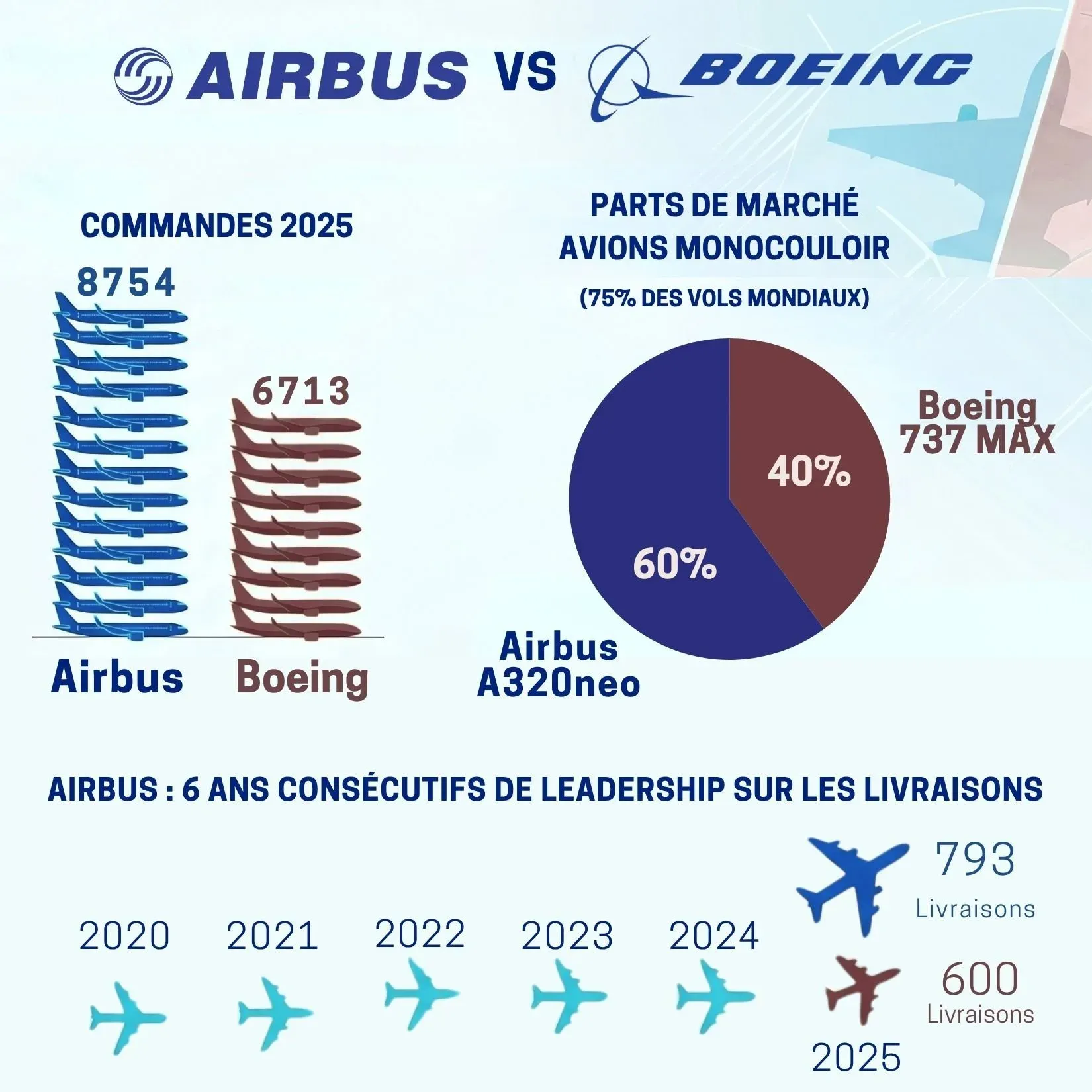
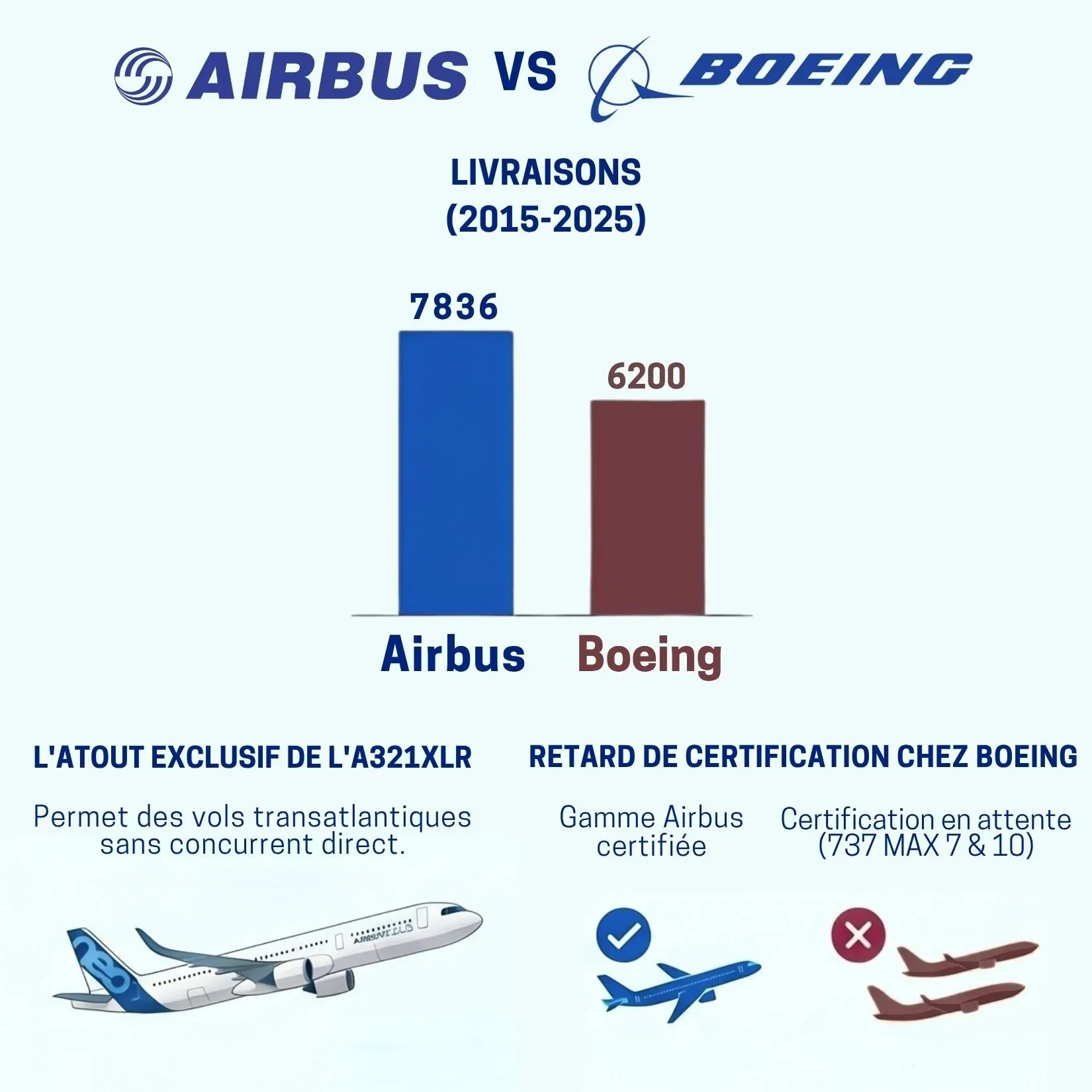
- 7,836 aircraft delivered versus 6,200 for Boeing between 2015 and 2025
- 8,754 orders versus 6,713 in 2025
But these figures do not tell the whole story, because the difference is not limited to selling more aircraft: it has become structural.
What makes the difference today
- A clear product advantage: Airbus offers the A321XLR, an aircraft capable of flying long routes (such as transatlantic flights) with a single-aisle airframe. Boeing does not yet have an equivalent and is facing delays on certain models.
- Fewer regulatory hurdles: the entire Airbus range is certified, whereas Boeing has to deal with delays and a loss of confidence following its recent quality problems.
- A more resilient industrial supply chain: European suppliers (engines, electronics, materials) have withstood post-Covid disruptions better than Boeing’s.
Two Airbus strengths explain this lead
- A robust industrial system: quality of engineering, rigorous inspections, reliable processes.
- Early positioning on:
- long-haul flights with smaller aircraft
- reducing fuel consumption
- the transition to cleaner fuels
The real challenge for Boeing
Boeing is losing market share and confidence in its technical quality, which is harder to rebuild: an aerospace programme spans 20 years, so the loss of credibility cannot be corrected quickly.
In summary
Airbus is not only winning the short-term commercial competition: Airbus is taking a deep lead, one of industrial reliability and long-term credibility.
Airbus is thus in a position to make the difference… over several decades!